Why proper computer disposal matters
Old computers are not just clutter — they carry data, valuable raw materials, and a legal footprint. In the UK, disposing of them incorrectly can breach the Data Protection Act 2018 / UK GDPR and the Waste Electrical and Electronic Equipment (WEEE) Regulations 2013. This guide walks you through how to do it safely, legally, and sustainably.
1. Back up anything you still need
Before anything leaves your office, back up documents, licences and settings to a secure cloud service or a new machine. Once the drive is destroyed, the data is gone for good — that is the point.
2. Sign out and deauthorise accounts
Sign out of browsers, cloud drives, iCloud, Microsoft accounts, password managers and any licensed software (Adobe, Office, design tools). This prevents residual access via cached credentials.
3. Destroy the data — do not just delete it
Emptying the recycle bin or even reformatting the drive does not remove your data. Files remain recoverable with off-the-shelf tools. The recognised UK standard for secure data sanitisation is NIST Special Publication 800-88 Revision 1, which defines three methods:
- Clear — overwriting the drive so casual recovery is impossible.
- Purge — cryptographic erase or degaussing so laboratory recovery is impossible.
- Destroy — physical shredding, disintegration or incineration.
For business data, always insist on a certificate of destruction that lists every drive by serial number. Without it, you cannot prove compliance in an audit.
4. Recycle responsibly under WEEE
Computers contain aluminium, copper, gold, plastics and hazardous substances (lead, mercury). The WEEE Regulations require businesses to use an Approved Authorised Treatment Facility (AATF) and keep records for at least four years. Landfill is not an option.
5. Consider reuse and refurbishment
The most sustainable disposal is the one that never happens. Machines that still work can be securely wiped and made available for charities and non-profits to receive free of charge. Items which cannot be repurposed are scrapped down for their raw materials. Devices which are still functional or can be made functional are made available for charities and non-profits to receive free of charge.
How Byebyte handles it — free of charge
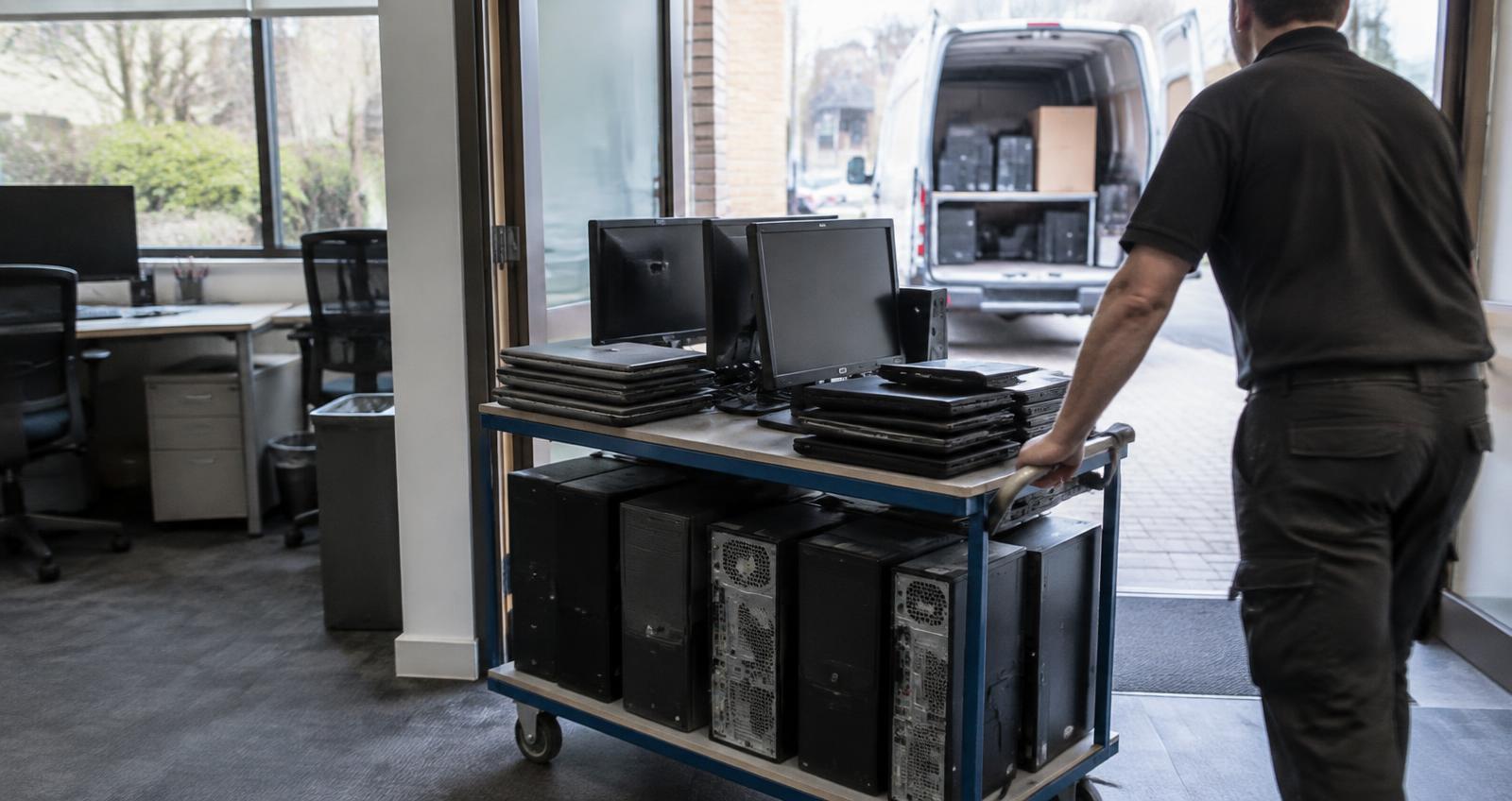
We provide free UK-wide collection with no minimum quantity. Every drive is wiped to NIST 800-88 or physically destroyed on request, every component is recycled under WEEE, and you receive a full certificate of destruction listing each device by serial number.
- Free nationwide collection — one laptop or a full server room.
- NIST 800-88 certified data destruction.
- Zero to landfill — reusable devices are made available to charities and non-profits free of charge; non-reusable items are scrapped down for their raw materials.
- GDPR-ready audit trail included.
Frequently asked questions
Can I just throw an old computer in the bin?
No. It is illegal under the WEEE Regulations, and it exposes you to a data breach.
Is factory reset enough?
No. Factory resets leave recoverable data on both HDDs and SSDs. Use certified wiping software or physical destruction.
What does it cost?
Nothing. Byebyte's collection, data destruction and recycling are free — funded by the recovery of raw materials from equipment that cannot be repurposed. Devices which are still functional or can be made functional are made available for charities and non-profits to receive free of charge.
Ready to dispose of your old computers the right way? Book a free collection and we will handle the rest.