Before you start: find every tape
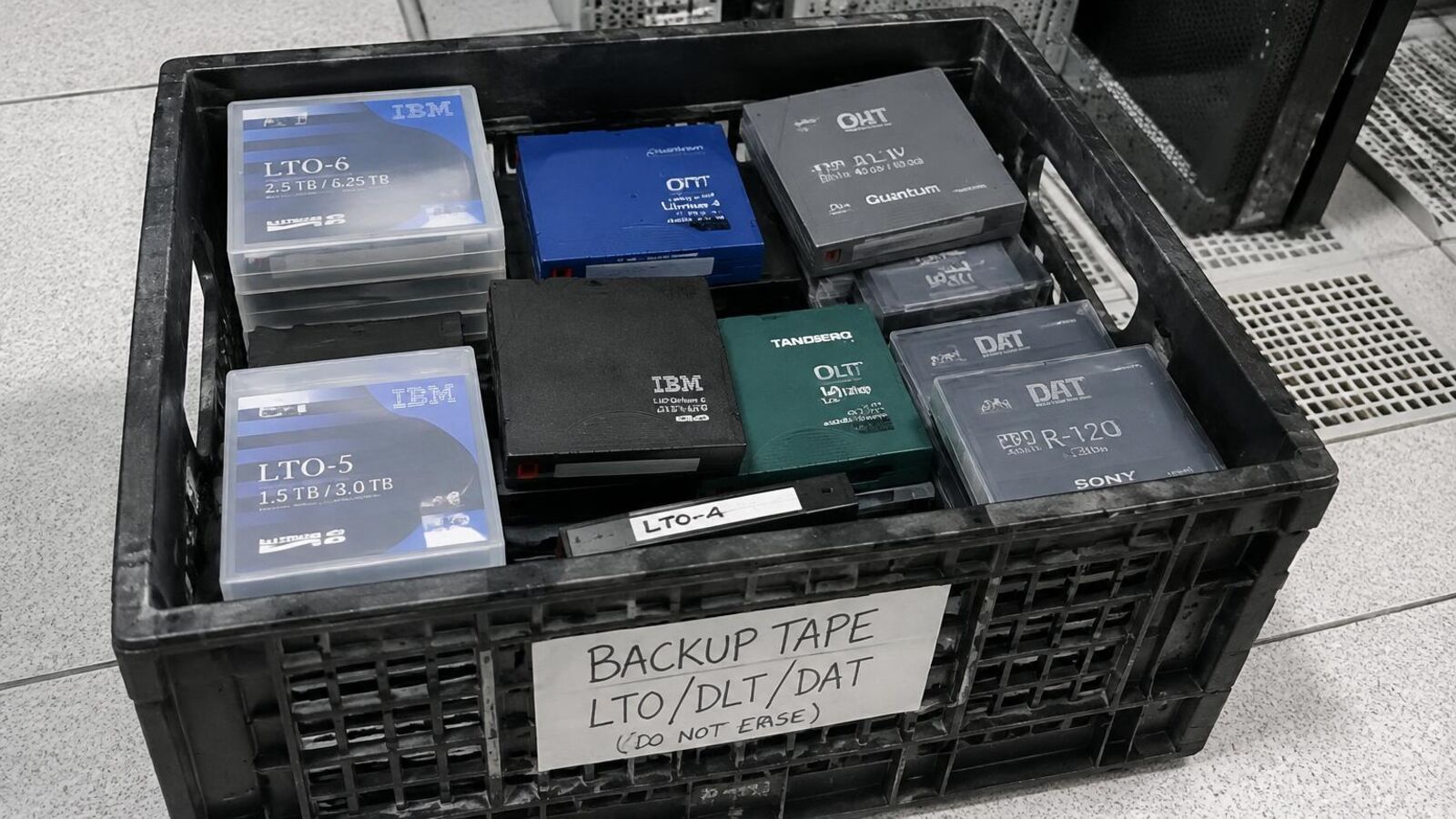
Tape estates are rarely in one place. Check server rooms, comms cupboards, fire safes, offsite storage contracts, departed IT managers' desks and old tape libraries still in their racks. Libraries and autoloaders often still have cartridges inside.
The checklist
- Confirm retention. Check with finance, legal and HR that the data on the tapes is past its retention period. Some records must be kept for six years or more.
- Check you can still restore what you need. If anything must be kept, migrate it to current storage before the tapes go.
- Count by format. LTO generations, DLT/SDLT, DAT/DDS and AIT. A rough count is fine.
- Bag and seal. Keep tapes in a locked room or sealed containers until collection.
- Use a collector with its own process. Ask who collects, where tapes are taken and how they are destroyed. See how to choose a data destruction company.
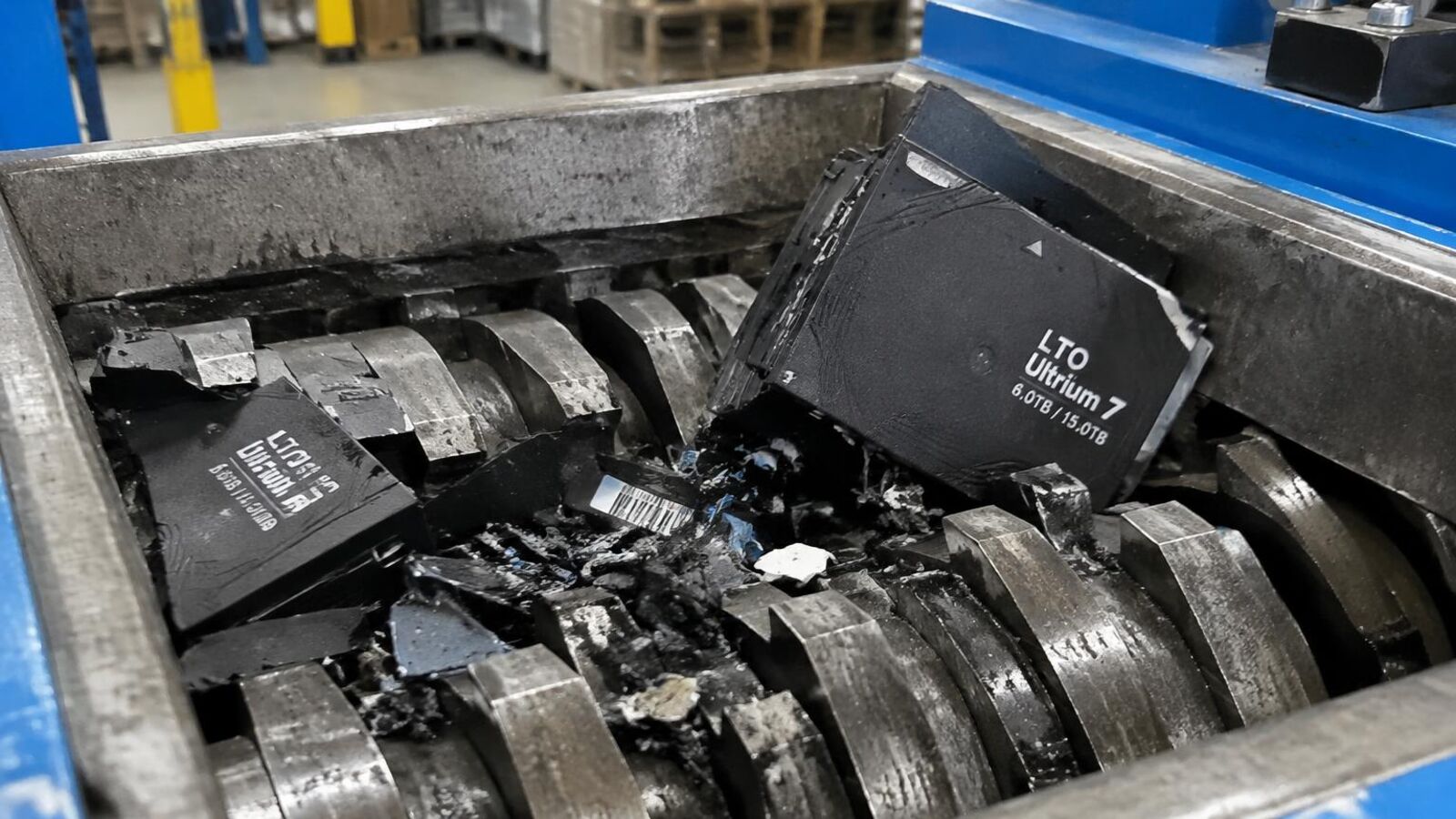
- Destroy physically. Shredding is the most reliable method for modern LTO media.
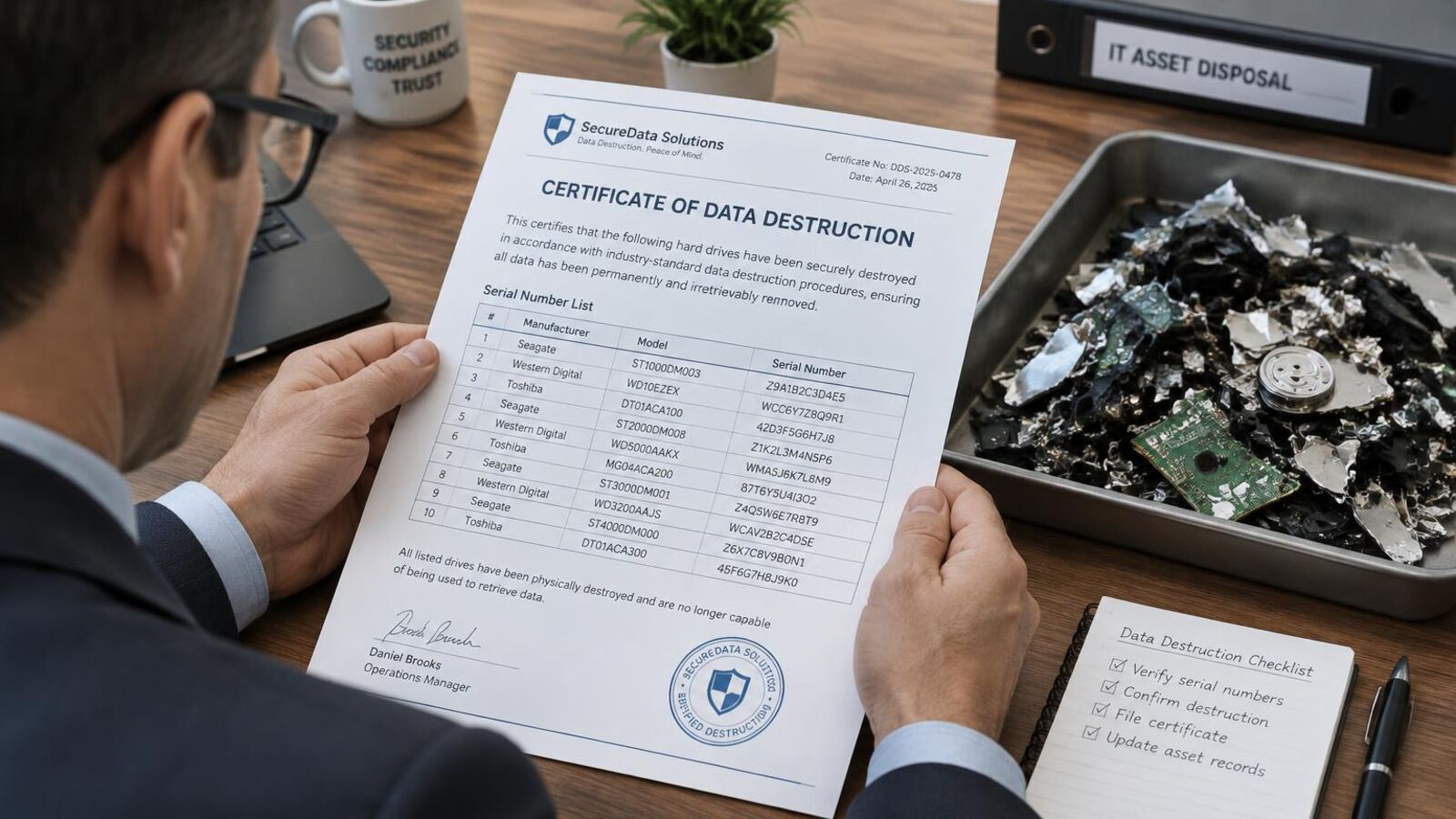
- Keep the paperwork. File the Waste Transfer Note and the Certificate of Data Destruction with your data protection records.
Don't forget the hardware
Tape drives, autoloaders and libraries are electrical equipment and fall under the WEEE Regulations. Collect them in the same visit as the tapes. Any internal drives or controller storage can be wiped or shredded too.
What paperwork should I get?
At a minimum: a Waste Transfer Note and a destruction certificate that lists the media and the method. Our WEEE paperwork guide explains why both matter. For the service itself, see backup tape destruction.
Book a free collection
Call 020 3432 4511 (Monday to Friday, 8am – 6pm) or book a collection online. Tell us roughly what you have and where it is, and we will confirm a date.